
🗓️ Originally published January 2021. Fully updated September 2026.
To choose a coaching niche, start with what you love to coach on, then find the client who wants that coaching enough to do the work. Check for barriers, then put it all in one sentence: your niche statement.
Every coach I’ve worked with in the last eight years has asked me some version of the same question: what’s my niche? It usually shows up right after they’ve decided a niche is a cage, and that picking one means waving goodbye to everybody else. I’ve had to answer it for my own business too, so I get it.
A coaching niche is simply a group of people who will be drawn to you and what you offer. That’s the whole definition. Nobody gets turned away at the door. What does happen when you skip choosing one is that people land on your site, can’t tell if you’re for them, and quietly leave. That costs you a lot more clients than getting specific ever will.
Quick intro if we haven’t met: I’m Cass, and Lovely Impact is where I help coaches get their businesses off the ground. Here’s what we’re covering in this post:
What a Niche Does
Coaching is crowded. ICF’s 2025 Global Coaching Study counted a record 122,974 coach practitioners worldwide, up 15% since 2023. And plenty of those coaches describe what they do as helping people live their best lives, which is a lovely sentiment that tells a potential client nothing.
A niche fixes that. When the words on your site sound like someone’s actual life, they stop shopping around and start picturing working with you. People hire the coach who gets their situation. Broad messaging can’t pull that off.

When I narrowed my own web design business to coaches, it wasn’t coaching, but the fear was identical. I’d been designing websites for about three years and was convinced I was shrinking my pool of potential clients.

Get Your Free Coaching Business Launch Checklist!
Fill out this form to access the free checklist with 110+ steps to launch your coaching business for success.
Plus, join the email list to stay up to date.
In reality, I opened myself up to a world of better content and marketing, and faster sales. That’s because I was speaking the language coaches understand, and it made them trust me more. The notes in my inbox for the last eight years often include some variation of “I decided to hire you because you work specifically with coaches.”
The same can be true for your niche. When you speak directly to your people and their situation, they trust you faster, and trust is what gets you hired.
The Simple Math Behind Your Niche
Good news: this is math, and you get to look at the answers in the back of the book.
What you love to coach on + the client who wants that coaching = your dream coaching business.
The left side of that equation is the hard part, which is exactly why everybody skips it and runs straight to the client. Don’t. You can’t get clear on the client who lights you up until you know what lights you up. So, questions. Grab a notebook, or at least a decent chunk of quiet:
- What problems do your clients bring that you’re always excited to coach on?
- What can you talk about for hours?
- What would you coach on even if nobody paid you?
- What do you daydream about coaching on, then dismiss as unrealistic?
That last one usually holds the honest answer. Give it a minute before you talk yourself out of it.
Next, a gut check. Do you want this business as it is, or do you feel like you should want it? Some coaches end up in a niche because it’s what they already knew, or because a dart landed there, and they find out later it doesn’t light them up. Better to find that out now. And if you’re wondering whether you need a certification to be credible enough to claim a niche at all, hang on to this: your life experience and your client results count too.
Look at results too, and count the happy accidents. Sometimes the result clients get from you is bigger than the topic you thought you coached on, and it points at your niche better than any topic list will.
Need starting points? Browsing common coaching niches can spark ideas, just run whatever you find through your own answers before you fall in love with it. You can also ask AI to pick your niche for you (lots of coaches do now). It’ll give you a starting point. It’ll also give that same starting point to every coach who asks, and it can’t capture what makes you different, which is what people hire you for.

Find the Person Who Needs It and Wants It
Tons of people need coaching. A much smaller group wants it enough to do the work right now, and that’s the group you’re niching for. Your dream client is ready to work and able to pay, today.
You’ve probably been told to build an ideal client avatar. I stopped calling it that, because in practice it turns into a guessing game: age, location, favorite podcast. Guesswork only takes you so far. A dream client archetype goes after what’s driving them instead. What do they want, what scares them, what have they already tried, and how do they want to feel when it’s solved?
Listen to how they describe themselves and their problem, then use those words. When you describe someone the way they’d describe themselves, they feel seen, and feeling seen is what gets the click. Ask what they’ve already tried and paid for, too. If they’ve bought a course and a planner and nothing changed, you now know what to say to them and where to find them.
Check for Barriers Before You Commit
Falling for a niche is the fun part. The step people skip is checking whether those clients can work with you. Barriers usually come down to money, geography, legalities, culture, or market demand, and love won’t get you past any of them.
A coach we worked with had a social work background and wanted to coach at-risk youth. Pure intentions, real experience. The problem was that the kids couldn’t afford coaching. Her plan was to bill schools instead, and then she found out the schools were underfunded too. She chose a new path, which hurts less than finding all that out after you’ve launched.
Some barriers you can design around. A fitness coach who loves working in person can keep her 1:1 sessions local and build an online program for everyone else.
This gets harder when you’re new. You don’t have first-hand proof that anyone will pay for coaching in your niche, so you’re working from a hunch. Go look at what people in that niche already spend money on. Courses and other coaches both count. Talk to a few of them about what they’ve tried and what they’d pay to fix. Then sanity-check your price against their budget, because if they’d have to give up something important to afford you, that’s a barrier too.
Write Your Niche Statement
Once you know the person and the problem, put it in one sentence:
I help [your dream client] with [your expertise] so they can stop/start [their primary pain point] and live [their dream].
For example: “I help first-time managers with leadership coaching so they can stop second-guessing every decision and lead a team they’re proud of.”

Now rewrite it in your own words. If it sounds like a LinkedIn bio, keep going. This is what you say when someone asks what you do, so it should sound like something a human said out loud at a party. If the blanks are harder to fill than they look, working through a niche statement one blank at a time usually shakes things loose.
Torn between two niches? Run both through the same questions. Which one do you want to coach on more? Which one has clients ready to pay right now? Then check the barriers on each. Usually one pulls ahead.
When Clients Aren’t Coming, Check Everything Else First
Almost every coach blames their niche when bookings are slow. It’s almost never the niche.
If nobody’s seeing your content, start with your marketing, because something is probably keeping it from reaching your people. If people follow you and engage but don’t book, look at your calls to action and your website copy, and count the clicks it takes to book a call. Too many, or not clear enough, and people give up.
Changing your niche is a real option, just the last one on the list. Before you decide it’s time to change your niche, make sure you’ve got evidence. A slow month doesn’t count.
Once You’ve Picked Your Niche
Once you know who you’re talking to, social posts get easier to write. Blog and video ideas fall right out of your dream client’s problems, and your content turns into a strategy that builds trust with the right people instead of random posting.
Your brain will try to talk you out of it. That’s normal, and you’re not a unicorn for having those fears. Write them down (that you picked wrong, that nobody will pay) and thank them for the input. Then keep going. A niche can change as you do, so check in on your dream client once a year and adjust. Choosing one now doesn’t lock you in.
Coaching Niche FAQs
Do I need a coaching niche?
You need a way to tell people who you help and with what, and a niche is just the name for that. Some advice says new coaches can serve anyone at first. That works for a few practice clients, but your marketing still needs a person to talk to, or nobody feels like you’re talking to them.
How specific does my coaching niche need to be?
Specific enough that your dream client hears their own life in your words. Try it on your niche statement: if you can fill every blank with a real answer instead of “people who want to grow,” you’re there.
Can I change my coaching niche later?
Yes, and plenty of coaches adjust theirs over time. Look at your dream client once a year and tweak as you change. Before you switch because bookings are slow, check your marketing and your booking process first, because it’s almost never the niche.
Can I have two niches?
You can serve more than one group, but lead with one, or people can’t tell what you do. If you’re torn between two, run both through the same questions: which one do you want to coach on more, and which one has clients ready to pay right now?
I’m new and have no clients. How do I know my niche will pay?
Without first-hand proof, you’re working from a hunch, so go get some evidence. Look at what people in that niche already spend money on, talk to a few of them about what they’ve tried, and check that your price fits their budget.
What’s the most profitable coaching niche?
The one where the people who want your coaching are ready to pay and can afford it. Lists of high-ticket niches can spark ideas, but they can’t tell you whether you’ll love the work or whether those clients can work with you.
Can AI pick my coaching niche?
It can give you a starting point, but it gives the same one to every coach who asks, and it can’t capture what makes you different. Use it to brainstorm, then run whatever it suggests through your own answers.
Time to Get to Work
That’s the math. Now you get to run it on your own business.
If you want to work through it yourself, the Niche Clarity Workbook walks you from what you love to coach on all the way to a finished niche statement, with your dream client archetype and brand messaging along the way.
And if you’ve done the thinking and still can’t make the final call, or you want someone to tell you honestly whether the niche you’re considering will work, that’s what the Niche Clarity Coaching Session is for. Before we meet, you fill out an intake form and your dream client archetype worksheet so I know where you’re starting. Then we spend 90 minutes talking through the pros and cons of the niche you’re weighing and pinning down the actual result you help clients get, which often shows you the niche more clearly than a worksheet can. You leave with a finished niche statement and an action plan for your next steps, plus the recording so you can go back to anything we said.
About The Author

Hey! I’m Cass, a Certified Life/Abundance/Business Coach and the founder of Lovely Impact. I help coaches launch their businesses with impactful coaching, and beautiful branding & websites. I'm sharing everything I've learned about building a coaching business on this blog.


I am a personal trainer and starting of my online coaching business and these tips are really helpful, thank you
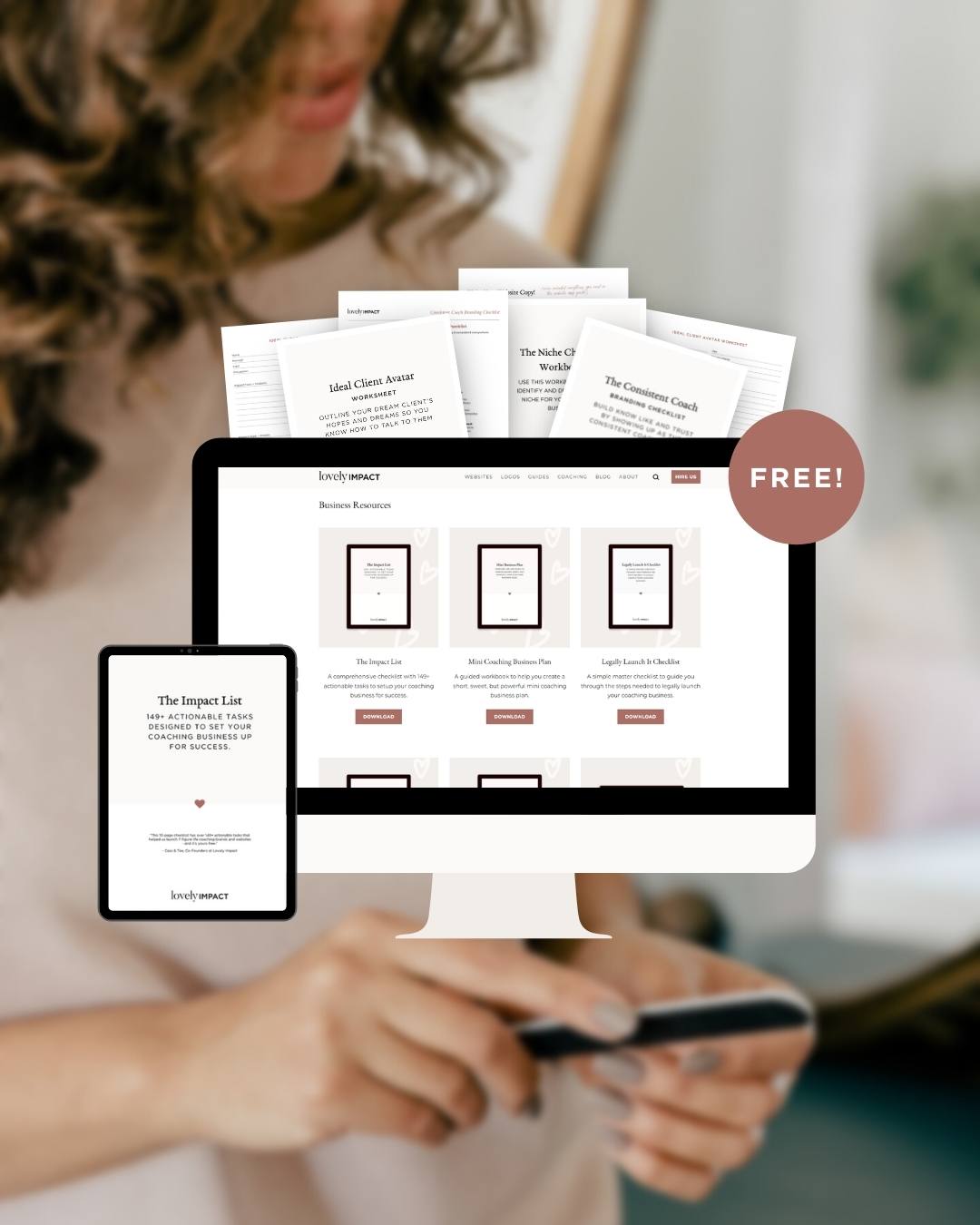
However, I have tried twice to download your free workbooks but unfortunately it doesn’t work. I have also checked my junk mail and I have not received anything. Would you be so kind and help me out on this? Thank you so much in advance.
Hey Konstantina! So glad to hear the tips are helping you kickstart your online coaching business! About the free resource library, I’ve just sent an email to you. If it hasn’t landed in your inbox or junk mail, please reach out to us through our contact page at https://lovelyimpact.com/contact/
We’ll make sure you get those valuable resources asap.